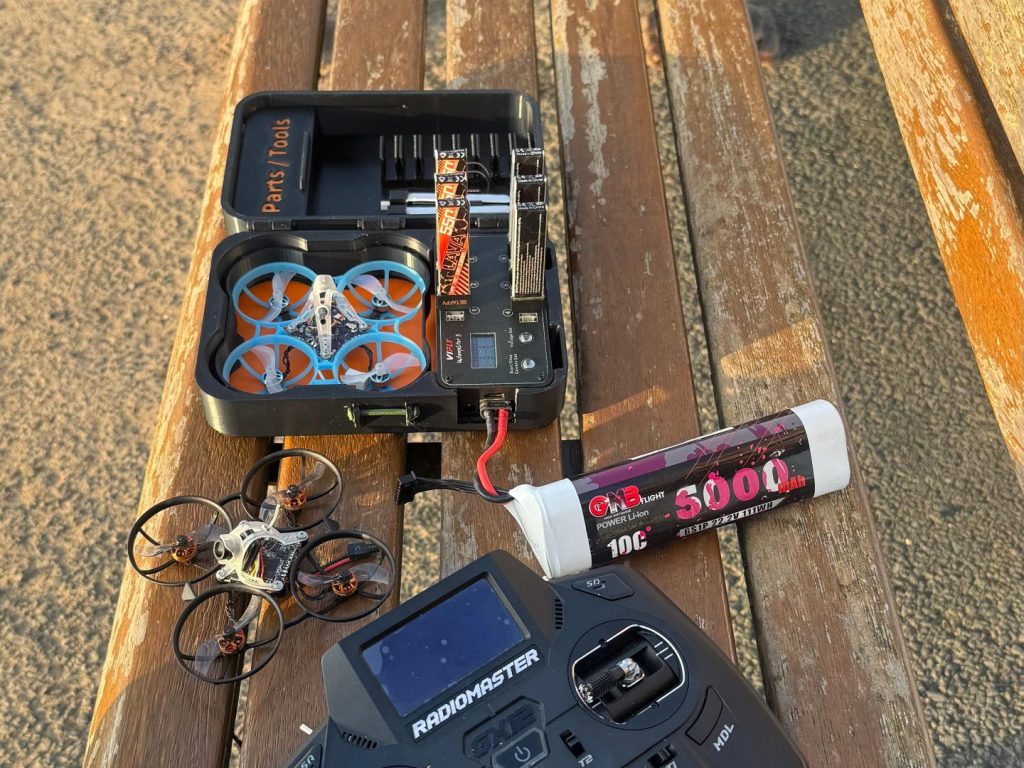
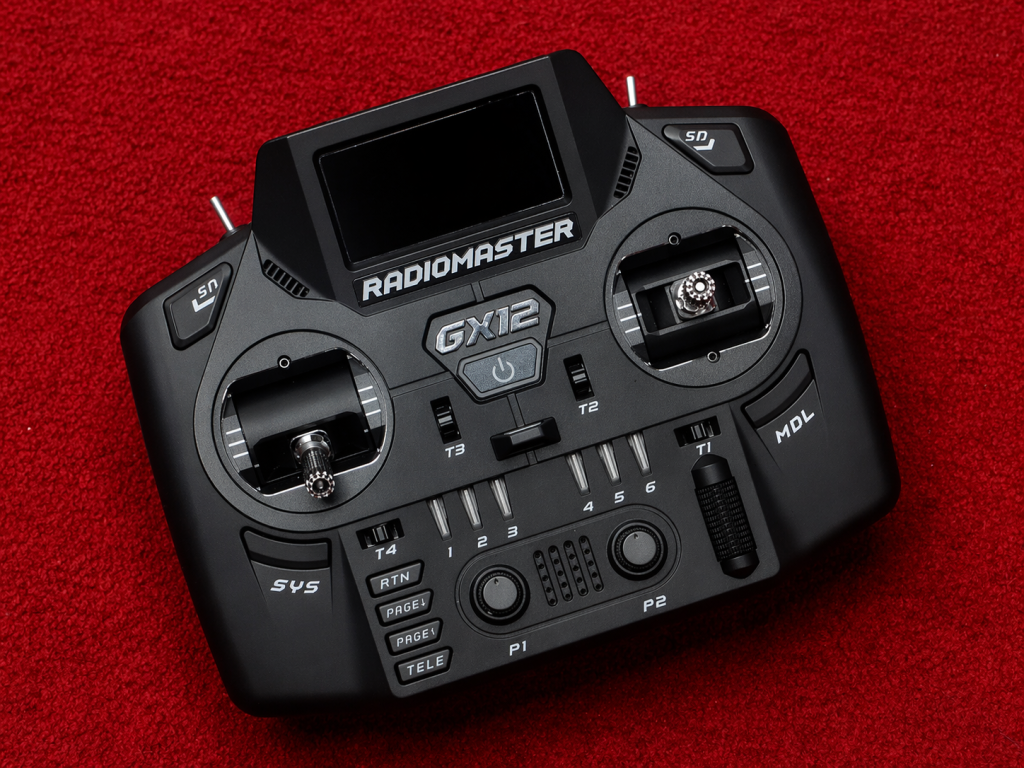
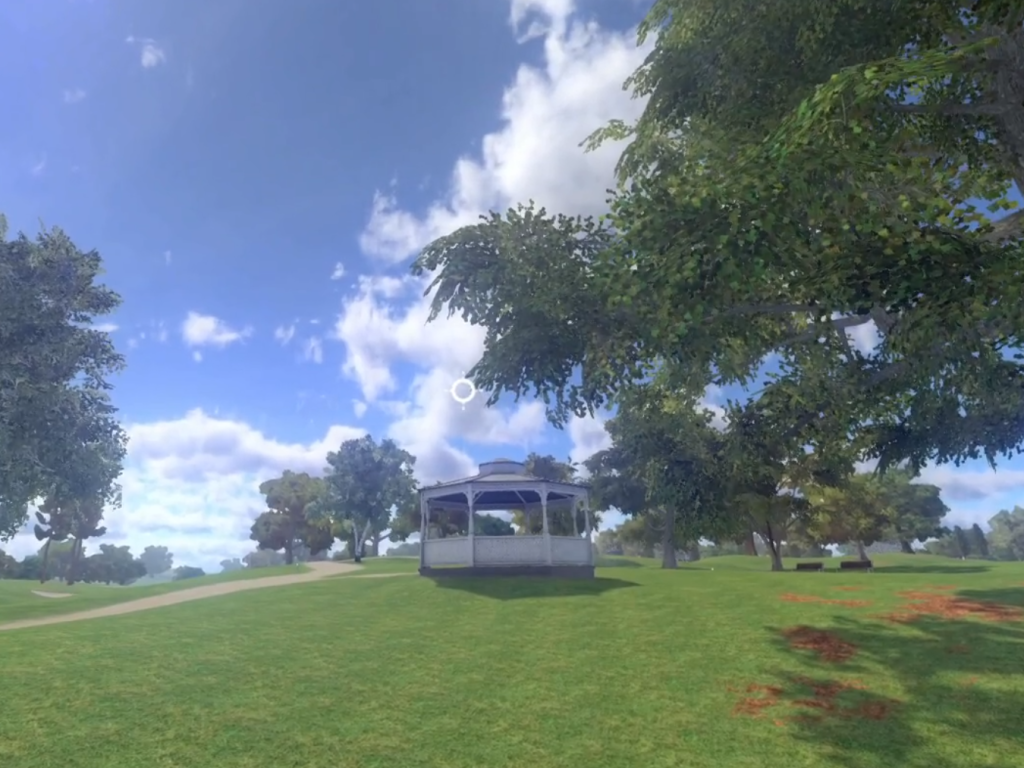
Don't try to get airborne with a real quad until you've got a few hours logged in the simulator. Once you're comfortable in the sim, at some point you're going to feel ready to fly a real quad. Before you head out to get airborne, there's just a few things to consider:
First Quad
The bigger the quad, the more dangerous they are, and the more expensive crashes are. Look, when you first start - you're going to crash. For that reason, I strongly recommend you start small, even if it's just for your initial flights. Personally, I think the best platform to get started on is a 75mm whoop like the BetaFPV Air75. A very popular choice is the slightly larger Mobula8.
Preflight Checklist
The vast majority of pilots I have flown with do not have a formal "preflight" routine for their hardware - but when you're new to it all, I strongly recommend you come up with a list of things to check before you take off. Experienced pilots will check the major components habitually, but a checklist will help when you're just starting out.
For a good starting point, check out this FPV Basics Checklist
First Flight
Keep your first flight boring - you're just here to get airborne.
I recommend for a first flight you take off, hover, and then land. Then consider performing some basic turns and then land. If things are going well, try some orbits, and then land.
This is a ritual I carry on to this day - on the first pack of any flying day I will take off, orbit around myself in each direction, and then set off to fly the line. This is a good idea for a couple of reasons, but the most important one is that I can safely test the controls to ensure that they all work in the correct sense. I can then ensure that I have good visibility through my goggles and I can listen to the quad for any unusual sounds. Working "in the correct sense" means that the control works on the correct axis, in the correct direction, and at the rate that you expect.
Also, even when you're in a good spot think about your arming process and how to keep things safe - if you've messed your build up it's entirely possible that the quad will "flip out" on you when you try to take off. Think about what you're going to do if this happens. Are you a safe distance away from the quad? Are you prepared to quickly disarm if necessary?
You should also think about how you're going to handle a "fly away" situation, again that's rare - but you should have a plan. During flight you should also be very careful where you fly in case the quad drops. This can happen where there is a link failure and the quad is configured to "drop on failsafe", but it can also happen due to hardware failures. Just because you have RTH configured does not mean your quad will never drop - it can still happen.
Also be aware of your battery, especially if you're starting with a whoop. You don't want to let LiPo batteries drop much below 3.0v under load, so think about your "turn around" voltage. Maybe for your first flights you should be really conservative and land at something like 3.5v - then as you gain skill and confidence you can push that closer to the lower limit. Be careful though, what if you're coming in to land at 3.1v and a dog runs into your landing zone? Have a plan for this.
One of the biggest differences you'll find outdoors versus the sim is weather. Wind can massively impact your ability to fly well, can put additional stress on your frame, motors, and batteries, and will impact your stability. Avoid windy days until you build up a solid foundation. Also beware of rain (and wet grass!) - unless you are very confident that your quad is fully waterproof, incidental contact with rain can cause significant failures - including in flight failures!
Carrying your Kit
Think about how you're going to get all of your kit to the spot. If you're being sensible then you've only got a micro whoop, a pocket full of batteries, your goggles, and controller to worry about - but as you move up towards bigger quads it's a good idea to think about how you're carrying them all.
For example, I usually head out to the spot carrying a 5" build, a 3.5" build, two 75mm whoops - and around 15 batteries, plus a bunch of 1S for the whoops. That's a backpack full of hardware and two quads hanging off the back! I also personally don't like making it obvious that I'm carrying quads other than when I'm actively flying. So I tend to wrap a waterproof backpack cover over my equipment whilst I'm hiking in.
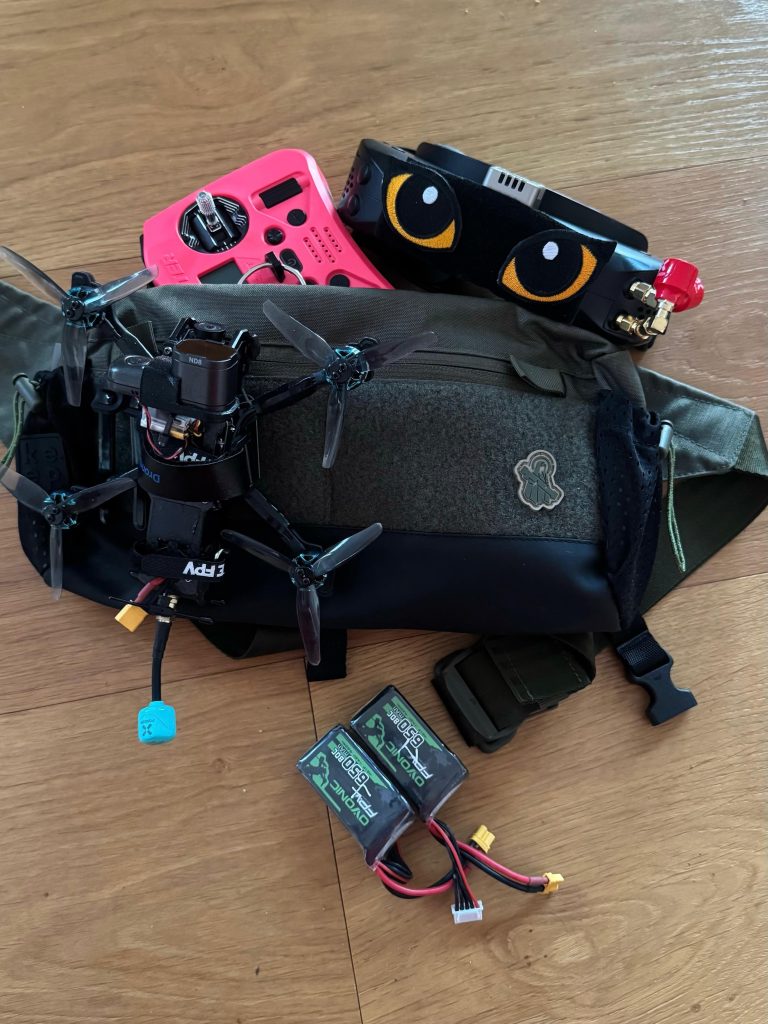
When you get started you'll have much less kit to worry about though; as an example here's how I used to carry my 3.5" build. That's a quad, controller, goggles, and six 4S batteries all neatly stored in a slingpack!
Regulations
Another thing to consider is the regulation in your region. Follow them. I'm sure there are some very experienced pilots out there that don't bother keeping up with their registrations or maybe exceed some weight limitations and that sort of thing. Let those guys take the risks.
Learn about the regulations in your area: what you can fly and where - and stick to them. During your early flights, if something goes badly wrong, the fact that you were following all regulations and were 100% legal, will help your situation.
Places to fly
For your first flight you want to make things as simple as possible; don't be thinking about spots based on how good the DVR footage is going to look - just think about safety. Ideally you want a very wide open field. Think about potential sources of danger, such as dogs, low flying aircraft, power lines, and pedestrians.
You will Crash
At some point in your first few sessions, you are going to crash. Don't worry about it, but think about it before it happens. There is no reset button with real quads, if you drop it and you don't have turtle mode or you get caught up in something - you will end up walking to retrieve your quad. It's a really good idea to consider how you will find a dropped quad too, GPS is okay - but a buzzer enabled by a switch is a lot better; especially if your quad loses power.
Some quads, especially micro whoops, come with a buzzer built in - but is it loud enough? You might also think that a buzzer isn't important because you're never going to fly out of direct line of sight. Well, you'll learn just how important a buzzer is when you first lose a quad in the long grass.
Before you fly, you may want to consider insurance too. Whilst in lots of jurisdictions insurance is not required for recreational flying - it's worth considering.
If you crash your quad and need to work on it at the spot, take your props off! Never work on a quad with the props on, regardless of where you are.
Karens
There's a lot of videos online of "Karens" going crazy about drones. I just wanted to end this article to note that after hundreds of flights, I've never personally had a problem like this - but I have had many occasions where people come over with eyes full of curiosity and want to talk about my quads. I've had families with young kids want to see the drones up close. I've had nerdy dads want to talk about how I built them. I've also had people ask "how do you get good photos if you're constantly doing flips?"
But it's worth thinking about before you take off: what are you going to do if a member of the public becomes irate at your drone? What if a dog tries to chase it? What if someone enters your landing zone and refuses to leave? It's a good idea to have a plan in place before it happens.
You'll also see people online posting about how the hobby is "dead", how regulation and Karens killed it. How they're selling all their kit because it's impossible to fly. Don't listen to them, I fly every week and I'd fly every day if I could fit it into my schedule. I love this damn hobby and it's far from dead.
All of that said, enjoy it! Your first flight will probably suck, but don't worry about it - all that matters is stick time. You'll get there, you'll get good. Keep going.